
Even if the bull run may continue, most experts say some profit booking is called for, points out Sanjay Kumar Singh.

Wall Street brokerage Goldman Sachs has flagged a slew of concerns on the surging COVID-19 caseload that has been hitting new records everyday, coupled with the rising lockdowns, forcing it to downgrade India's GDP growth forecast for the full year to 10.5 per cent from 10.9 per cent, apart from pegging down stock indices valuation and earnings. In a detailed note on Tuesday, Goldman Sachs' house economists led by Sunil Koul said these record number of pandemic cases and a host of key states announcing stricter lockdowns of late have fuelled serious growth concerns, leaving investors worried about the risks to macro and earnings recovery.
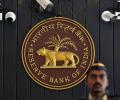
The Reserve Bank of India (RBI) is precariously balancing two opposing objectives - maintaining easy financial condition in the domestic market, while ensuring external stability - and economists have started taking note. They say India is going through the classic trilemma of the 'Impossible Trinity'. The RBI cannot have an independent monetary policy (setting domestic interest rates) in an environment of an open capital account and flexible exchange rates. What is even more complicated for the central bank now is that financial market stability overlays all the other three objectives.

Foreign Direct Investment into India rose by 13 per cent in 2020, boosted by interest in the digital sector, and while fund flows "declined most strongly" in major economies such as the UK, the US and Russia due to the Covid-19 pandemic, India and China "bucked the trend", the UN has said.

To be able to manage any such uptick, Indian IT services players are hiring more locals, and relying on hybrid work models.

72 per cent of the revenue of Indian firms (India Inc) is derived from the domestic / home market - the sixth highest in percentage terms in the emerging market (EM) and the Asian region, said a recent report by Morgan Stanley. The balance, according to the report titled 'Global Exposure Guide 2021' co-authored by analysts led by Jonathan F Garner, their chief Asia and emerging market strategist, is split between the developed markets (DMs) and other EMs. The report is based on an analysis of 3,300 companies globally that have revenue exposure in 17 different regions.

Economy has become a major cause of concern for the new government with GDP dropping to 5.8 per cent in the last quarter of the 2018-19.

Ushering in a big wave of reforms by implementing the four labour codes, setting up the national social security fund to cover over 38 crore informal sector workers and improving the ease of doing business will top the agenda of the labour ministry in the New Year. In a major move, the ministry launched the e-Shram portal on August 26, 2021 for creating a national database of over 38 crore informal sector workers. It will help the government to ensure last-mile delivery of benefits of various social security schemes to the informal-sector workers.

The market's sensitivity to the US Fed's balance sheet changes makes it vulnerable to the possible tapering of the bond buying programme and the resulting stagnation or even shrinkage in the balance sheet.

'Whatever the BJP tries to do, they will not be able to make a big mark in Kerala.'

Do you have parents who have turned 60? You may want to forward Sarbajeet K Sen's suggestions to them.

Equity flows turning positive could give fund managers firepower to invest in the markets. This could come in handy as flows from foreign investors have tapered off amid rising bond yields in the US.

Economists caution that the underlying cause could be an alarming drop in demand -- something that's not good for economic growth.

There are all sorts of genres on OTT, ready to cater to all of one's moods.

The Power Of The Dog and Dune lead the pack while films like King Richard, Belfast and West Side Story grab quite a few noms.

Only West Asia and North Africa have a lower employment rate than India, points out Mahesh Vyas.

To overcome your fear of the property being taken over, draw an ironclad agreement with a good lawyer's help, recommends Sanjay Kumar Singh.

Prime Minister Narendra Modi on Thursday said his government is using all channels including diplomatic to bring back high-profile economic offenders, leaving them with no option but to return to the country. Speaking at a symposium on credit flow and economic growth, he asked banks to support wealth and job creators with proactive lending while promising to stand by any loans given in right earnest. "In our attempt to bring back fugitive (economic offenders), we relied on policies and law and also used diplomatic channels.

RSS-aligned Bharatiya Mazdoor Sangh (BMS) on Monday expressed disappointment over the government's budget proposals with regard to divestment and foreign direct investment, especially in the insurance sector. The BMS, however, lauded the government for its current efforts on the massive vaccination programme, a special scheme for tea workers in West Bengal and Assam, labour oriented push on infrastructure projects in construction sector and development of five major fishing harbours viz. Kochi, Chennai, Visakhapatnam, Paradip, and Petuaghat as hubs for economic activities etc. On other Budget proposals, it said in a statement that "mixing the beautiful concept of Aatmanirbhar Bharat with FDI and disinvestment in the Union Budget is disappointing for the employees".

A vast majority of employees do just the bare minimum that ensures they escape censure or reprimand, such that they are seen to be doing their bit, without coming in the cross-hairs of the HR team for under-performance, observes Sandeep Goyal, managing director, Rediffusion.

The markets are showing no signs of stability as the economic impact of the coronavirus outbreak is likely to be significant for many major economies.

Chingari, Roposo, Khabri and Trell are seeing huge traction as people are looking at options to earn incentives from home. Music streaming app Gaana, which is strongly placed in the market with 150 million users, recently opened up its short video platform for subscribers.

The Reserve Bank of India (RBI) on Wednesday proposed to make interoperability mandatory for digital payments firms. It also allowed users to withdraw cash from e-wallets and fintech companies to process RTGS and NEFT transactions. The RBI expressed dissatisfaction over prepaid payment instruments' (PPIs') failure to migrate towards full-KYC (know your customer) PPIs, and therefore interoperability, even two years after guidelines were issued.

There is an acute imbalance of power between the various organs of the State, including the executive, the legislature, the judiciary, and the ultimate sovereign -- the people, argues R Jagannathan.

Since October, FPIs have sold over $26 billion worth of stocks, which is the largest selling ever seen in India, observes Akash Prakash.

Within hours of assuming office, West Bengal Chief Minister Mamata Banerjee on Wednesday initiated a major reshuffle in the police hierarchy, transferring 29 top-level police officers, mostly those who were shifted by the election commission prior to the polls.

The recent protests by employees of Urban Company and the case of a a Zomato delivery executive who died in a road accident point to the severely straitened condition of gig workers during the ongoing Covid-19 pandemic. Budget 2021 had promised several measures to help the cause of gig economy workers, but most of them are yet to see the light of day. Even after a year, the country's gig workers continue to be without any social security cover or a minimum wage guarantee. "In Budget 2021, finance minister Nirmala Sitharaman had announced that the government is looking toward including migrant and gig workers for social security benefits," says Srinivas Kotni, managing partner, Lexport, a consulting firm. Parliament had passed the Code on Wages in 2019 and Code on Industrial Relations, Social Security and Occupational Safety, Health and Working Conditions in 2020.

The substantially increased economic dualism may exert lasting negative influences which could include a reduced potential for economic growth; the persistence of a very weak employment and poverty situation; rising social and political discord; and heightened vulnerability to geopolitical challenges, cautions Shankar Acharya, former chief economic adviser to the Government of India.

India's work participation rate is lower than Pakistan and Bangladesh. Are Indians lazy? No, there are no jobs, asserts Aakar Patel.

The highest number of URLs actioned pertained to Abuse/Harassment and IP-related Infringement (46 each), followed by Privacy Infringement (35), Impersonation (16) and Defamation (15). URLs actioned under Misinformation/Synthetic and Manipulated Media category stood at 7, and Sensitive Adult Content and Hateful Conduct (one each).
To strengthen corporate governance practices and disclosure requirements, Sebi on Thursday decided that top-1,000 listed firms should formulate a dividend distribution policy.

Having emerged as the face of opposition resistance to the Narendra Modi juggernaut after the TMC's triumph in the assembly elections, West Bengal Chief Minister Mamata Banerjee is locked in an unequal battle as she squares off with "lightweight" rivals in her own lair--Bhabanipur.

Over the next three - six months, UBS believes earnings will be the main driver for EM equities outperformance.

A record GST tax collection, an overhaul of the income tax return filing portal and the landmark move to scrap retrospective taxation have set the stage for the next level of reforms in tax administration that include bringing a framework for cryptocurrencies and rationalising the GST rate structure. With tax reforms such as faceless assessment taking roots, 2021 will go down as the year that pivoted the tax administration in a country aspiring to become the world's favourite investment destination. The task ahead is going to be a tough one as the tax department would grapple with taxing cryptocurrencies, rationalising Goods and Services Tax (GST) rates to shore up revenues and post June 2022, the scenario of how the GST revenue plays out for states without the Centre's support of compensation.

Members of Joint Platform of Doctors, in their letter to Banerjee, referred to the steep rise in coronavirus cases in Kerala after the recent Onam festival, and a similar situation in Spain following International Women's Day celebrations and a football match to make their point.

The listing day gain-to-loss ratio for FY21 was 71 per cent, the highest since FY17, when it was 85 per cent.

Amid the ongoing festival season in the country, the hiring of gig workers has zoomed across sectors as the businesses have begun opening up leading to an uptick in consumer sentiments and rising pent-up demand, according to experts. "In the third quarter, with the onset of festive season, we are witnessing a 400 per cent spike in the hiring for gig workers. Earlier, in the first quarter of this year, as many businesses and companies were not operating at full strength, growth was muted. "However, things began picking up and became more promising from the second quarter, as the demand for gig workers across sectors grew," Taskmo, a subsidiary of Quess Corp, co-founder Prashant Janadri told PTI.
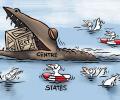
In signs of acceleration in economic activity, India's tax collections on goods sold and services rendered returned to over Rs 1 lakh crore in July after the second wave of Covid-related restrictions caused a blip in the previous month. Goods and Services Tax (GST) mop-up grew 33 per cent year-on-year in July to over Rs 1.16 lakh crore, indicating that the economy is recovering at a fast pace. In July 2020, the collection was Rs 87,422 crore. This is the second highest collection so far this fiscal after a record Rs 1.41 lakh crore mop-up in April.

What worked for Hyundai in India when so many other auto manufacturers have had to eat humble pie? Pavan Lall finds out.

Is the worst over for Indian banks? The past two years saw them ride on treasury trades as deposits soared and credit growth dipped sharply. Gross and net non-performing assets (NPAs) moved south, and the provision coverage ratio (PCR), capital buffers, and profitability indicators are back at pre-pandemic levels. So, what's the plot ahead?
 © 2026 Rediff.com - Advertise with us - Disclaimer - Privacy Policy - Sitemap - Feedback - About us - Terms of use - Grievances